

Local SEO Services in Southampton: What a Properly Structured Engagement Actually Covers (And What Most Providers Skip)
You’ve had the pitch. A Southampton SEO agency promises page one rankings, more phone calls, increased footfall. The monthly fee sounds reasonable. You sign up.
Three months later, you’re getting reports that look impressive but your phone isn’t ringing any more than it did before. The rankings they’re celebrating are for terms nobody in Southampton actually searches for. You’ve paid for “local SEO” but you’re struggling to identify what’s actually been done beyond a few blog posts and a tweaked Google Business Profile.
This isn’t unusual. Local SEO services vary wildly in scope, and unless you know what constitutes a properly structured engagement, you’ll struggle to evaluate whether what you’re being offered is comprehensive or just window dressing.
Here’s what a genuine local SEO service for a Southampton business should cover, and what to watch for when providers start cherry-picking the easy bits.
The Core Components That Actually Move the Needle
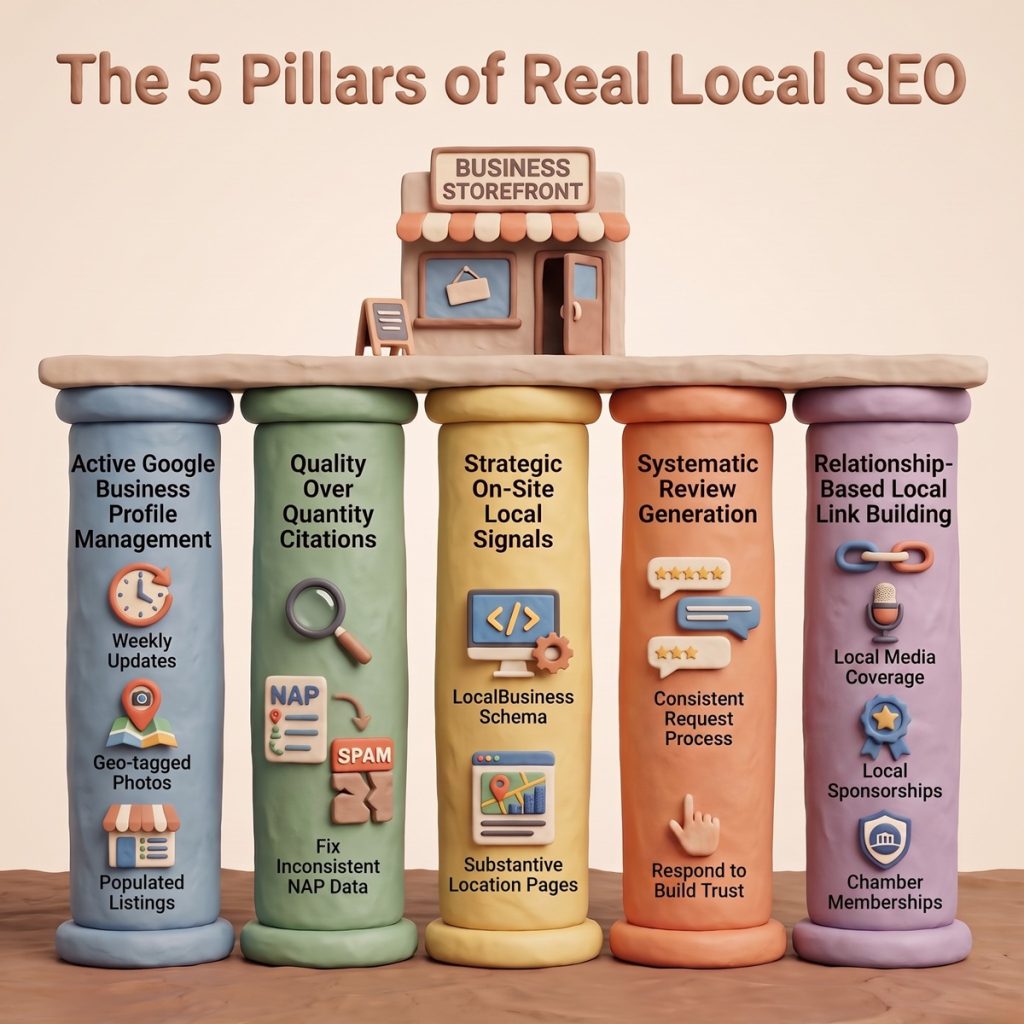
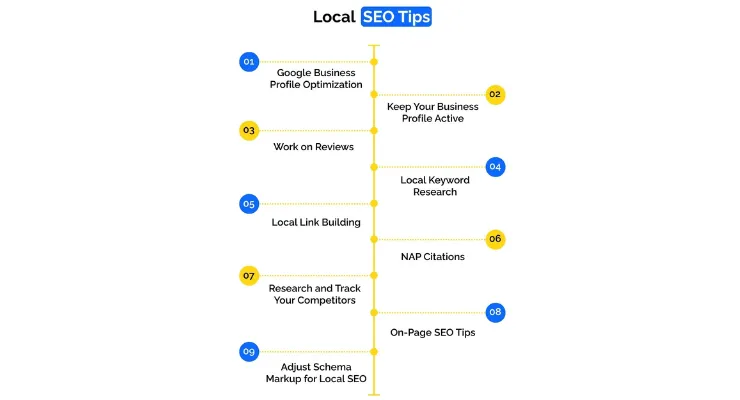
A proper local SEO engagement isn’t a single activity. It’s a structured programme covering four distinct areas, each requiring consistent work. Miss one and the whole thing underperforms.
Google Business Profile Optimisation (And Ongoing Management)
This isn’t just claiming your listing and uploading a logo. A properly optimised GBP requires:
Category selection based on search behaviour, not just what sounds right. The primary category you choose directly influences which searches trigger your profile. Get this wrong and you’re invisible for the terms that matter.
Weekly posts and updates that signal to Google your business is active. Most providers set up your profile then largely ignore it. But GBP rewards fresh signals, offers, updates, photos, particularly in competitive Southampton sectors like hospitality, trades, and professional services.
Photo optimisation with geo-tagging. Images taken in Southampton and properly tagged help reinforce location signals. Stock photos or images without location data are wasted opportunities.
Product and service listings fully populated. These create additional opportunities to appear in specific local searches and provide more touchpoints for potential customers researching what you offer.
Review monitoring and response protocols. This isn’t just about asking for reviews. It’s about responding to every review, positive and negative, in a way that demonstrates you’re actively managing your reputation. Google watches this. So do potential customers reading through your profile at 11pm on a Sunday.
What gets skipped: ongoing management. Many providers do the initial setup then move on. But GBP performance degrades without consistent activity, and competitors who are actively managing their profiles will overtake you within months.
Local Citation Building (Done Properly, Not Bulk-Submitted)
Citations are mentions of your business name, address, and phone number across the web. They matter because they corroborate to Google that your business is real, established, and operates from the location you claim.
A proper citation strategy for Southampton businesses includes:
Core directory submissions to the established platforms that carry genuine authority: Yell, Thomson Local, Scoot, Touch Local, and industry-specific directories relevant to your sector.
Local Southampton directories and community sites, listings that geographically anchor your business. These might include Southampton.co.uk business listings, local chamber of commerce directories, and neighbourhood sites specific to areas like Ocean Village, Shirley, Portswood, or Bitterne.
NAP consistency auditing. Before building new citations, a decent provider audits existing mentions of your business and corrects inconsistencies. If your address appears as “St Mary Street” in some places and “Saint Mary Street” in others, or your phone number varies, it dilutes the signal. Fixing these inconsistencies often delivers faster results than building new citations.
Quality over volume. Bulk citation services that submit your business to 200 directories sound appealing but often create more problems than they solve. Many of those directories are spam-ridden, irrelevant, or so low-quality that association with them does more harm than good.
What gets skipped: the audit and cleanup phase. It’s time-consuming and doesn’t produce a big number to put in a report, so many providers skip straight to building new citations on top of inconsistent existing data.
On-Site Optimisation for Local Intent
Your website needs to make it unmistakably clear to both Google and visitors that you serve Southampton and surrounding areas. This goes well beyond adding “Southampton” to your homepage title tag.
A properly structured on-site approach includes:
Location pages that serve a genuine purpose. If you serve multiple areas around Southampton, Eastleigh, Totton, Chandler’s Ford, Romsey, dedicated location pages can work, but only if they contain substantive, differentiated content. Thin location pages with identical copy except for the town name get ignored or filtered.
Schema markup for LocalBusiness. This structured data helps Google understand your business type, location, opening hours, and service area. It’s not visible to visitors but it’s readable by search engines and should be implemented properly, not just copied from a template without customisation.
Embedded maps and clear location signals. Your contact page should include an embedded Google Map centred on your Southampton location. Your footer should consistently display your full NAP details on every page. These aren’t ranking factors in isolation, but they contribute to the overall local relevance signal your site sends.
Locally-focused service pages. If you’re a Southampton accountant, your “Tax Returns” page should reflect the local context where relevant, local tax implications, serving Southampton businesses, understanding the local commercial environment. Not forced, not keyword-stuffed, but genuinely useful to someone searching for that service in Southampton.
What gets skipped: the strategic thinking behind location targeting. Many providers bolt “Southampton” onto existing pages and call it local SEO, without considering whether the content actually serves local search intent or provides any local context that would justify ranking above a national competitor.
Review Generation and Reputation Management
Google reviews directly influence both rankings and conversion. A Southampton business with 47 reviews averaging 4.7 stars will outperform a competitor with 8 reviews at 5 stars, even if other factors are equal.
A proper review management programme includes:
Systematic review requests at natural touchpoints. This means identifying the moments in your customer journey where asking for a review makes sense, after a successful project completion, following a service appointment, when a customer provides positive feedback. It should feel natural, not desperate.
Making it easy. Most customers willing to leave a review won’t bother if the process is complicated. A direct link to your Google review page, sent at the right moment via email or SMS, dramatically increases completion rates.
Response protocols for negative reviews. Every business gets negative reviews eventually. How you respond matters more than the review itself. A measured, professional response that acknowledges the issue and explains what you’ve done to address it often converts readers from sceptical to sympathetic.
Review velocity management. Getting 30 reviews in one week then none for three months looks suspicious to Google. A steady, consistent flow of reviews signals an actively trading business with ongoing customer interactions.
What gets skipped: the systematic approach. Most businesses (and many agencies) treat review generation as an occasional campaign rather than an embedded process. Without systems, review acquisition becomes sporadic and ineffective.
Local Link Building (The Difficult Bit Most Providers Avoid)
Links from other Southampton websites and local organisations signal to Google that you’re genuinely embedded in the local business community. This is where most local SEO engagements fall short, because local link building requires creativity, persistence, and genuine relationship-building rather than scalable processes.
A meaningful local link strategy might include:
Sponsorships of local Southampton organisations, sports clubs, or events that result in a link from their website. A link from Southampton FC community programmes, local sports clubs, or charitable organisations carries local relevance signals that a generic directory link doesn’t.
Relationships with complementary local businesses. If you’re a Southampton web designer, links from local photographers, copywriters, or marketing consultants you’ve worked with provide both referral traffic and local SEO value.
Local media coverage. Getting featured in the Southern Daily Echo, Southampton Solent University publications, or local business features provides high-authority local links. This requires newsworthy content or expertise worth quoting, not just asking for coverage.
Local business associations and chambers of commerce. Membership in Southampton Chamber of Commerce, Business Improvement Districts, or industry-specific local groups often includes website listings that carry genuine local authority.
What gets skipped: almost everything. Local link building is difficult, time-consuming, and doesn’t scale. Many providers either skip it entirely or rely solely on low-value directory submissions they call “local links.”
Reporting That Focuses on Business Outcomes, Not Vanity Metrics
This isn’t technically part of the work itself, but it determines whether you can evaluate if the engagement is working.
Proper reporting for Southampton local SEO should show:
Rankings for terms that actually generate business. “Southampton accountant” matters if you’re an accountant. “Financial services solutions provider Hampshire” probably doesn’t, even if you’ve reached position three.
Google Business Profile insights how many people viewed your profile, clicked through to your website, requested directions, or called you directly from search results. These are business actions, not just visibility metrics.
Conversion data from local traffic. If your rankings and visibility are improving but phone calls and enquiries aren’t, something in the conversion path is broken. Good reporting identifies this early.
Citation consistency status not just how many citations you have, but whether discrepancies are being resolved and new inconsistencies detected and fixed.
What gets skipped: connecting SEO activity to business results. Many agencies report rankings and traffic because those numbers generally trend upward, even when they’re not translating into new business. If your reporting doesn’t connect to revenue or qualified leads, you can’t judge return on investment.
What Drives the Cost (And Where Corners Get Cut)
Understanding where the time goes in a local SEO engagement helps you evaluate whether a provider’s pricing reflects proper service delivery or cut-price shortcuts.
Manual work and strategic thinking are expensive. Citation auditing, location page content development, review response management, and local link prospecting all require human judgement and effort. Automated tools can assist but can’t replace the strategic decisions.
Ongoing management costs more than setup. The GBP posting, review monitoring, citation maintenance, and ranking tracking are recurring activities. A provider charging £300/month for comprehensive local SEO isn’t covering the cost of delivering it properly.
Local link building is the costliest component because it’s the least scalable. Building genuine relationships with local organisations and securing meaningful local coverage requires creativity and persistence that can’t be rushed or automated.
Where corners get cut: providers either eliminate the time-intensive manual work (citation auditing, local link building) or reduce ongoing management to quarterly check-ins rather than weekly activity. The resulting service looks similar on the proposal but delivers substantially less.
How Southampton Businesses Should Evaluate Local SEO Proposals
When you’re comparing local SEO providers in Southampton, ask these specific questions:
“How often will you post to our Google Business Profile, and what will those posts contain?” If the answer is “we’ll set it up initially” or “as needed,” that’s insufficient.
“What’s your process for identifying and correcting citation inconsistencies before building new citations?” If they skip straight to the number of citations they’ll build without mentioning audit and cleanup, they’re missing a critical phase.
“How will you build local links specific to Southampton, and can you give examples of links you’ve secured for other clients?” If they only mention directories, they’re not doing proper local link building.
“What location-focused content will you create for our website, and how will you ensure it serves genuine search intent?” If they suggest creating dozens of near-identical location pages, they’re optimising for 2015 Google, not 2026.
“What’s your review generation process, and how will you help us systematise it?” If they’re only offering to monitor reviews rather than help you generate them systematically, you’re getting half the service.
The answers to these questions tell you whether you’re being offered comprehensive local SEO or a stripped-down version that hits some basics but avoids the difficult work that actually differentiates your business from competitors.
What Southampton Businesses Often Misunderstand About Timelines
Local SEO isn’t immediate. Even with everything done properly, expect 3-4 months before you see meaningful ranking movement, and 4-6 months before that translates into consistently increased enquiries.
This isn’t agencies managing expectations downward. It’s how search engines work. Google needs time to discover new citations, assess review velocity changes, evaluate new content, and recalculate where your business should rank relative to competitors who’ve been working on their local SEO for longer.
The businesses that get frustrated and switch providers after two months often restart this timeline with each new agency, never staying the course long enough to see results from any of them.
What you should expect within the first 90 days:
- Complete citation audit completed and major inconsistencies corrected
- Google Business Profile fully optimised with regular posting schedule established
- Review generation system implemented and initial reviews coming in
- Location-focused content added to your website with proper schema markup
- Initial local link opportunities identified and outreach begun
What you shouldn’t expect within 90 days:
- Page one rankings for competitive terms
- Doubled phone enquiries
- Complete displacement of established competitors
Providers promising dramatic results within 4-6 weeks are either targeting uncompetitive terms that won’t drive business, or they’re overpromising to close the sale.
Frequently Asked Questions
Q: How much should Southampton businesses expect to pay for proper local SEO?
A: Comprehensive monthly local SEO typically ranges from £600-£1,500 depending on competition in your sector and geographic scope. Anything substantially cheaper likely omits the time-intensive manual work, citation auditing, local link building, ongoing GBP management, that makes the difference between mediocre and effective local SEO.
Q: Can I do local SEO myself rather than hiring an agency?
A: You can handle the basics, claiming and optimising your Google Business Profile, ensuring your website contains clear location information, asking customers for reviews. Where most business owners struggle is the time commitment for ongoing management, the technical aspects of citation auditing and schema markup, and local link building, which requires both expertise and established relationships. It’s less about capability and more about whether it’s the best use of your time.
Q: How do I know if my current local SEO provider is actually doing the work?
A: Ask for access to the tools they use for citation tracking and rank monitoring so you can see the data yourself. Request screenshots of GBP posts they’ve published. Ask for the specific local links they’ve built, with URLs you can verify. Check your Google Business Profile directly to confirm posting frequency. If they’re resistant to showing you the actual work rather than summarised reports, that’s concerning.
Q: Does local SEO work for service-area businesses that don’t have a shopfront?
A: Yes, but the approach differs slightly. Google allows service-area businesses to hide their address and instead specify service areas. The core components remain the same, GBP optimisation, citations, reviews, local content, local links, but the emphasis shifts toward service areas rather than a specific storefront location. A Southampton plumber serving a 15-mile radius still benefits enormously from proper local SEO even without a retail premises.
Q: Should Southampton businesses target Southampton specifically, or broader Hampshire?
A: Depends on your actual service area and competition. If you genuinely serve all of Hampshire but most enquiries come from Southampton and immediate surroundings, prioritise Southampton and nearby towns where you actually want more business. Broader geographic targeting dilutes your local relevance signals and puts you against stiffer competition. Better to dominate Southampton searches than appear weakly for vague Hampshire-wide terms.
If you’re evaluating local SEO services in Southampton and want to understand what a properly structured engagement would look like for your specific business, we’re happy to walk you through it. No obligation, no sales pressure, just a straightforward conversation about what would actually move the needle for your business and what it would realistically cost. [Get in touch](https://www.thickrope.com/contact/) and we’ll take it from there.