
Why SEO in Poole Requires a Different Strategy Than Anywhere Else on the South Coast
If you’re running SEO for a business in Poole using the same playbook that works in Bournemouth, Southampton, or Brighton, you’re leaving money on the table.

Poole isn’t just another seaside town with a marina. It has one of the highest concentrations of household wealth outside London and the Home Counties, a second-home population that skews search volume patterns, retirees with completely different browsing behaviour, and a tourism economy that operates on a compressed seasonal calendar. Each of those factors changes what people search for, when they search, and, critically, what signals convince them to pick up the phone.
Most agencies treat Poole as “Bournemouth’s neighbour” and apply broad South Coast tactics. That approach consistently underperforms because it ignores the specific audience segments that drive commercial intent in BH13–BH17 postcodes.
The Second-Home Effect: Why Search Volume Doesn’t Match Population
Poole has one of the highest concentrations of second homes and holiday lets in the South of England. Sandbanks alone, with an average house price exceeding £1.5 million, sees a rotating population of part-time residents who live elsewhere most of the year.
Here’s what that means for SEO: your search volume data is lying to you.
Standard keyword tools measure searches based on population density and typical user behaviour. But Poole’s actual searcher base fluctuates dramatically by season and even by week. A significant portion of high-value searches, for marine services, property maintenance, interior designers, private chefs, concierge services, come from people whose primary address is in London, Surrey, or overseas.
The strategic implication: if you’re targeting only BH postcode IP addresses or optimising for “near me” searches, you’re missing the London-based searcher who types “boat maintenance Poole Harbour” six weeks before arriving for the summer. They’re not local. They won’t show up in “Poole” location filters. But they spend more than almost any other segment.
Your SEO strategy needs to capture intent from outside the immediate geography whilst still dominating the hyper-local results for year-round residents. That requires a dual approach most agencies never build.
Retiree Search Behaviour: Longer Sessions, Different Trust Signals
Poole has a significantly older demographic than the UK average. Retirees and pre-retirees represent a substantial portion of the resident population, particularly in areas like Lilliput, Canford Cliffs, and Branksome Park.
This group searches differently:
- Longer research cycles. They read multiple pages, spend more time on site, and cross-reference reviews before making contact. If your bounce rate is high but session duration is long, that’s not a problem, it’s this demographic doing their homework.
- Phone calls, not forms. Conversion tracking that relies solely on contact form submissions will undercount enquiries by 40–60% in Poole. This audience picks up the phone. If your agency isn’t tracking call conversions properly, you have no idea what’s actually working.
- Authority signals matter more than speed or “modern” design. A sleek, minimal website with generic stock photography underperforms compared to one with named staff, specific local credentials, and evidence of longevity. Retirees want to know you’ve been in business for fifteen years, not that you have a trendy sans-serif font.
Generic SEO advice tells you to optimise for mobile and keep everything above the fold. In Poole, a significant portion of your highest-value traffic is on desktop, reading everything, and looking for proof you’re not new or temporary.
The £80,000+ Household Income Threshold: What Affluence Does to Search Intent
Poole consistently ranks among the top UK towns for average household income. Areas like Sandbanks, Canford Cliffs, and Lilliput have median incomes well into six figures.
Affluent searchers don’t behave like average consumers:
- They search for outcomes, not prices. “Best marine surveyor Poole Harbour” outperforms “cheap boat survey Poole” by a factor of ten in click-through and conversion. If your keyword strategy is built around cost competitiveness, you’re attracting the wrong audience.
- They expect you to already know the context. Content that over-explains or talks down performs poorly. If you’re writing about waterfront property maintenance and you’re defining what “decking” is, you’ve lost them. Assume knowledge. Get specific faster.
- They convert on expertise, not offers. Discounts, limited-time promotions, and “call now” urgency tactics actively repel this demographic. They want to know you’ve handled complex projects, you understand regulations around harbour properties or conservation areas, and you won’t need your hand held.
Your meta descriptions, title tags, and on-page copy need to signal expertise and specificity, not accessibility and affordability. That’s the opposite of what works in most UK towns, where cost is the primary conversion barrier.
Tourism Seasonality: The May–September Revenue Cliff
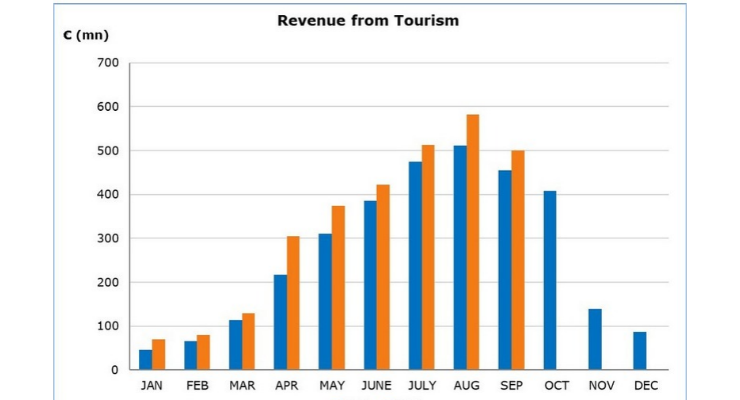
Poole’s tourism economy is heavily weighted toward late spring and summer. The harbour, beaches, and water sports drive visitor numbers that quintuple between May and September, then collapse in October.
If you’re in hospitality, leisure, retail, or any visitor-facing sector, your SEO strategy must account for the fact that six months generate 70–80% of annual revenue.
The mistake most businesses make: they optimise year-round and wonder why winter traffic doesn’t convert. The search intent in February is fundamentally different from July. Someone searching “things to do in Poole” in February is probably a local looking for a rainy-day activity or a researcher planning a summer trip. In July, it’s a visitor who’s here now and ready to spend.
Your content calendar, your paid search budget, and your organic targeting should shift dramatically by quarter. Build SEO equity in winter when competition is lower and CPCs are cheaper. Harvest it in summer when intent is hot and margins allow for higher acquisition costs.
Most Poole businesses run the same campaigns every month and leave a six-figure opportunity on the table.
The Professional Services Cluster: B2B Search No One Talks About
Poole isn’t just tourism and retirees. There’s a significant and growing professional services sector, marine engineering, financial services, tech firms in Poole’s Enterprise Zone, and maritime businesses serving the commercial harbour.
B2B search intent in Poole is almost entirely invisible if you’re only looking at consumer keywords. These businesses don’t search for “accountant near me.” They search for “R&D tax credit specialist Poole” or “ISO certification marine industry Dorset.”
The search volumes are low, sometimes fewer than 50 searches per month. Most agencies dismiss them. But the contract values are enormous, the sales cycles are long, and the businesses that rank for these terms often win five- and six-figure projects from a handful of enquiries.
If you’re in professional services and you’re not targeting the specific, low-volume, high-intent terms your actual clients use, you’re hoping for referrals and waiting for the phone to ring. That’s not a strategy.
Why “South Coast SEO” Fails in Poole
Most agencies sell “local SEO” as a single package: Google Business Profile optimisation, some local citations, a handful of location-based keywords, maybe a blog post about the town.
That works in homogenous markets. Poole is not homogenous.
You have four distinct audience segments operating simultaneously:
1. Affluent year-round residents with long research cycles, desktop-heavy browsing, and high lifetime value
2. Second-home owners and part-time residents searching from outside the area, often months in advance
3. Seasonal tourists with immediate, high-intent searches concentrated in six months
4. B2B and professional services buyers with ultra-specific, low-volume, high-value search terms
A single strategy cannot serve all four. You need segmented keyword targeting, different content for different intent stages, conversion tracking that captures phone calls and enquiries across multiple channels, and an understanding of when each segment is actually in-market.
Generic local SEO ignores all of that. It optimises for “Poole” as a location keyword and assumes everyone searching is the same. They’re not.
What a Poole-Specific SEO Strategy Actually Includes
If you’re serious about visibility in Poole’s search landscape, here’s what needs to be different from a standard local SEO build:
Dual geographic targeting. Rank locally for year-round residents and seasonally for London/South East searchers planning trips or managing second homes. That means separate content streams and location signals that extend beyond BH postcodes.
Call tracking as a primary conversion metric. Not an add-on. If you’re not attributing phone enquiries to specific keywords and pages, you’re making decisions blind.
Seasonal content calendars. Your publishing schedule, internal linking, and on-page emphasis should shift quarter by quarter to match when each segment is actively searching and ready to convert.
Authority-first content. Not beginner’s guides. Not “what is X” posts. Deep, specific, demonstrable expertise on the exact problems your high-value audience is trying to solve.
Long-tail B2B keyword clusters if you’re in professional services. Ignore search volume. Target intent.
Desktop experience treated as equal to mobile. Poole’s demographic still converts heavily on desktop. If your site is mobile-first and desktop is an afterthought, you’re losing enquiries.
This isn’t more work than standard SEO. It’s different work. And it requires someone who understands Poole’s audience composition, not just local SEO tactics copy-pasted from another town.
Frequently Asked Questions
Q: Does Google Business Profile still matter for high-value services in Poole?
A: Yes, but not for the reasons most agencies claim. GBP isn’t about map pack rankings for affluent or B2B clients, they rarely use map search. It’s a credibility signal. An incomplete or outdated profile suggests you’re not established, which is disqualifying for high-value Poole demographics.
Q: Should I target Bournemouth keywords if I’m based in Poole?
A: Only if you genuinely serve Bournemouth clients and the service is worth the drive. Bournemouth search volume is higher, but intent is different. Poole clients expect Poole businesses. Targeting Bournemouth to inflate traffic numbers usually tanks conversion rates.
Q: How far in advance do I need to start SEO for summer tourism season?
A: January at the latest. Organic visibility takes three to four months to build. If you start optimising in April, you’ve missed the research phase when visitors are planning trips. Paid search can cover the gap, but you’ll pay significantly more per click than if you’d built organic equity earlier.
Q: Is it worth targeting marine and harbour-specific keywords if search volume is low?
A: Absolutely. Poole Harbour is the second-largest natural harbour in the world and the town’s defining geographic feature. Marine-related searches have exceptionally high commercial intent. A keyword with 30 monthly searches and three conversions is worth more than a keyword with 500 searches and five conversions if the contract value is ten times higher.
If your SEO strategy treats Poole like any other South Coast town, you’re competing on the wrong terms. We’ve spent over 25 years building search visibility for businesses across the UK, and we know the Poole market requires a different approach. If you’d like us to audit where your current strategy is missing the specific segments that drive revenue in BH postcodes, [get in touch for a no-obligation Poole SEO consultation](https://thickrope.com/contact).